



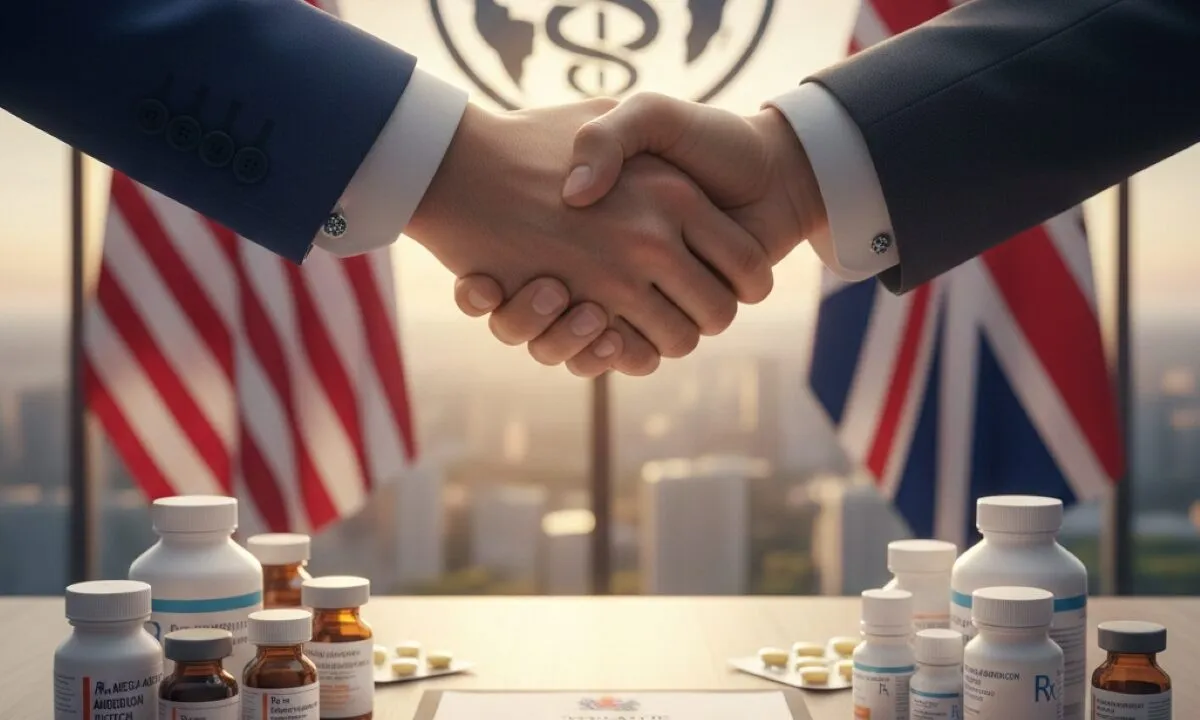
For the next three years, British pharmaceutical exports will be free of tariffs under a new trade agreement between the US and the UK. In return, the UK government promised to raise the NHS's willingness to pay for drugs, which would be the largest adjustment to its drug-pricing structure in nearly two decades.
Pressure from Washington, where President Donald Trump has threatened to levy tariffs of up to 100% on branded drugs imported into the United States, has resulted in the deal. One of Britain's most prosperous export sectors, pharmaceuticals were shipped to the US for about £11 billion in the year that ended in September, according to figures from the Department for Business and Trade.
The deal "guarantees that UK pharmaceutical exports worth at least £5 billion annually will continue to enter the US without tariffs," said Peter Kyle, the secretary of business and trade. He continued by saying that the plan will promote investment and help maintain highly skilled jobs in the UK's bio sciences sector.
What the United Kingdom has decided to alter
The agreement calls for a 25% increase in the NHS's cost-effectiveness criterion for new medications. Additionally, NHS spending on drugs will rise from 0.3% to 0.6% of GDP during the next ten years. The rebate rate that pharmaceutical companies are required to pay when NHS spending exceeds agreed-upon limitations will also be set at 15%, down from nearly 20% the previous year.
According to officials, the goal of these changes is to expedite patients' access to cutting-edge medications. The national pharmaceuticals regulator, NICE, anticipates that the modifications may result in an extra three to five approvals annually in addition to its regular evaluations.
Why the US pursued the agreement
US officials have long maintained that while other wealthy nations enjoy lower prices, American patients pay a disproportionate amount of the cost of global medication development. Trump has frequently criticized reliance on foreign manufacture, even though pharmaceuticals were not specifically targeted in his previous tariff actions.
The UK deal, according to White House spokesperson Kush Desai, is a "historic step" that guarantees other wealthy countries "contribute their fair share" to the price of introducing innovative medications to the market. According to US Health Secretary Robert Kennedy Jr., the agreement improves the equilibrium of the pharmaceutical trade between the US and the UK.
UK News