UK terror threat raised to 'severe' as Trump lifts whisky tariffs, say Scotland papers


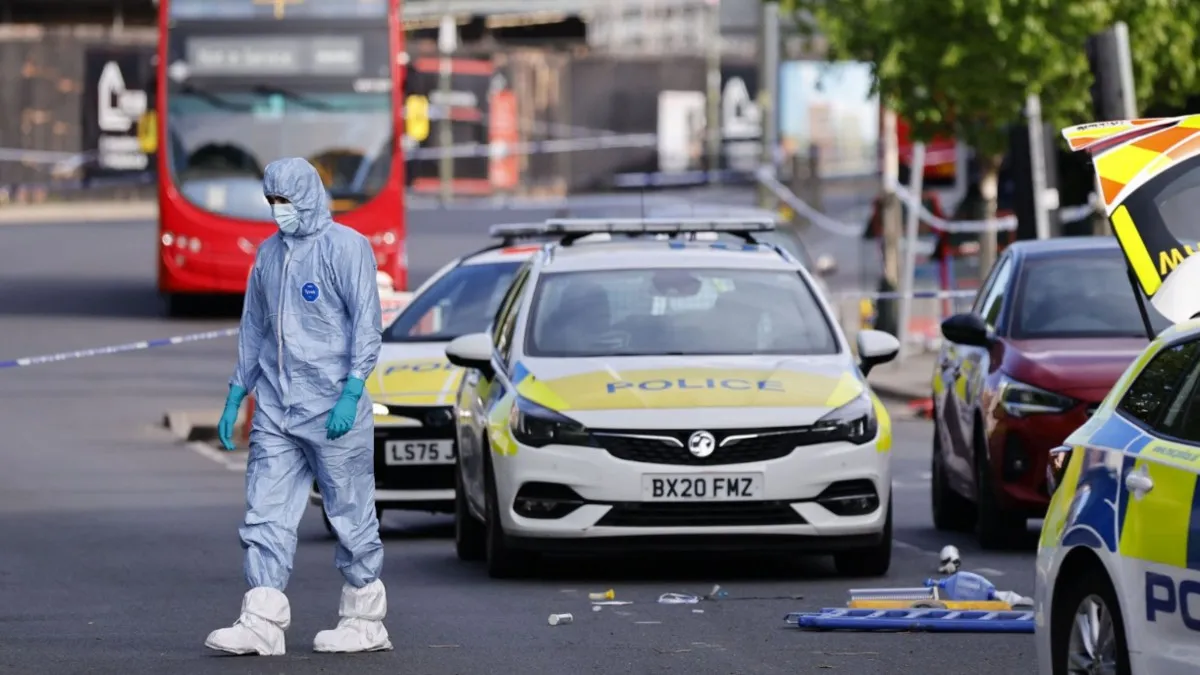


Britain's terror threat level has been raised to its second-highest rating after a knife attack on two Jewish men in north London left the country on edge. The Government confirmed the change on Wednesday, 30 April, the same day President Donald Trump announced he was dropping tariffs on Scotch whisky — a piece of good news that Scottish papers splashed across their front pages.
The Joint Terrorism Analysis Centre raised the national threat level from "substantial" to "severe", meaning security chiefs now believe a terrorist attack in the UK is highly likely within the next six months. The decision came one day after a man stabbed two Jewish men in Golders Green, north London, in what police declared a terrorist incident.
The two victims — Shloime Rand, 34, and Moshe Ben Baila, 76 — were both taken to hospital and are expected to make a full recovery. Mr Rand, who had just left his local synagogue, was stabbed in the chest. He told reporters from his hospital bed: his attacker came at him with a knife and he was lucky to escape with his life. The attack lasted just 15 minutes but caused shockwaves far beyond north London.
A 45-year-old British national born in Somalia was arrested after volunteers from the Jewish community group Shomrim detained him before police arrived and tasered him. Counter terrorism officers said the suspect had been involved in a separate knife incident in south-east London the same morning.
What the threat level change means for the public
"Severe" is the second highest of five possible threat levels in the UK. It means security services believe an attack is not just possible but highly likely. The highest level, "critical", is only used when an attack is thought to be imminent.
The Home Secretary said the decision was not based on the Golders Green attack alone. She pointed to a longer rise in both Islamist and extreme right-wing terrorism, and said the threat to Jewish and Israeli people and institutions in the UK had been growing for some time. The Government said new funds would be made available immediately to improve security at synagogues, Jewish schools and community buildings across the country.
New laws are also being fast-tracked through Parliament to crack down on groups carrying out hostile activity on behalf of foreign states. Police forces across England, Scotland and Wales were told to review their security plans in light of the raised threat level. Counter Terrorism Policing said it was going through all live cases and persons of interest as a matter of urgency. Officers asked the public to stay alert but not alarmed.
Trump drops Scotch whisky tariffs after royal visit
On the same day as the terror announcement, Scottish papers had a very different story to celebrate. President Trump said he was removing tariffs on Scotch whisky following a four-day state visit to the United States by King Charles III and Queen Camilla, which ended on Wednesday.
On social media, Trump wrote that the King and Queen had persuaded him to do something nobody else had managed. He said he was removing the tariffs and restrictions on whisky to allow Scotland and the US state of Kentucky to trade freely again. Kentucky produces nearly all of the world's bourbon, and Scottish distillers depend on used bourbon barrels to age their Scotch. The two industries are closely linked.
The tariffs had been in place since a 2025 trade agreement placed a 10 per cent tax on most British goods entering the United States. The Scotch Whisky Association said the damage was serious: exports to the US fell by 15 per cent, a loss of roughly £933 million. The US is Scotland's single biggest whisky export market.
Scotland's First Minister John Swinney called the news a great success. He said people's jobs had been at stake and millions of pounds were being lost every month. The head of the Scotch Whisky Association, Mark Kent, said the special relationship between Scottish and American whisky makers could now be rebuilt. US Trade Representative Jamieson Greer confirmed that preferential duty access would be given to whisky made in the UK, though the full details of the deal were still being worked out.
UK News