White House Defends Pardon Covering Julio Herrera Velutini in Wanda Vázquez Case, Citing Political Persecution exposing 10-Day Timeline


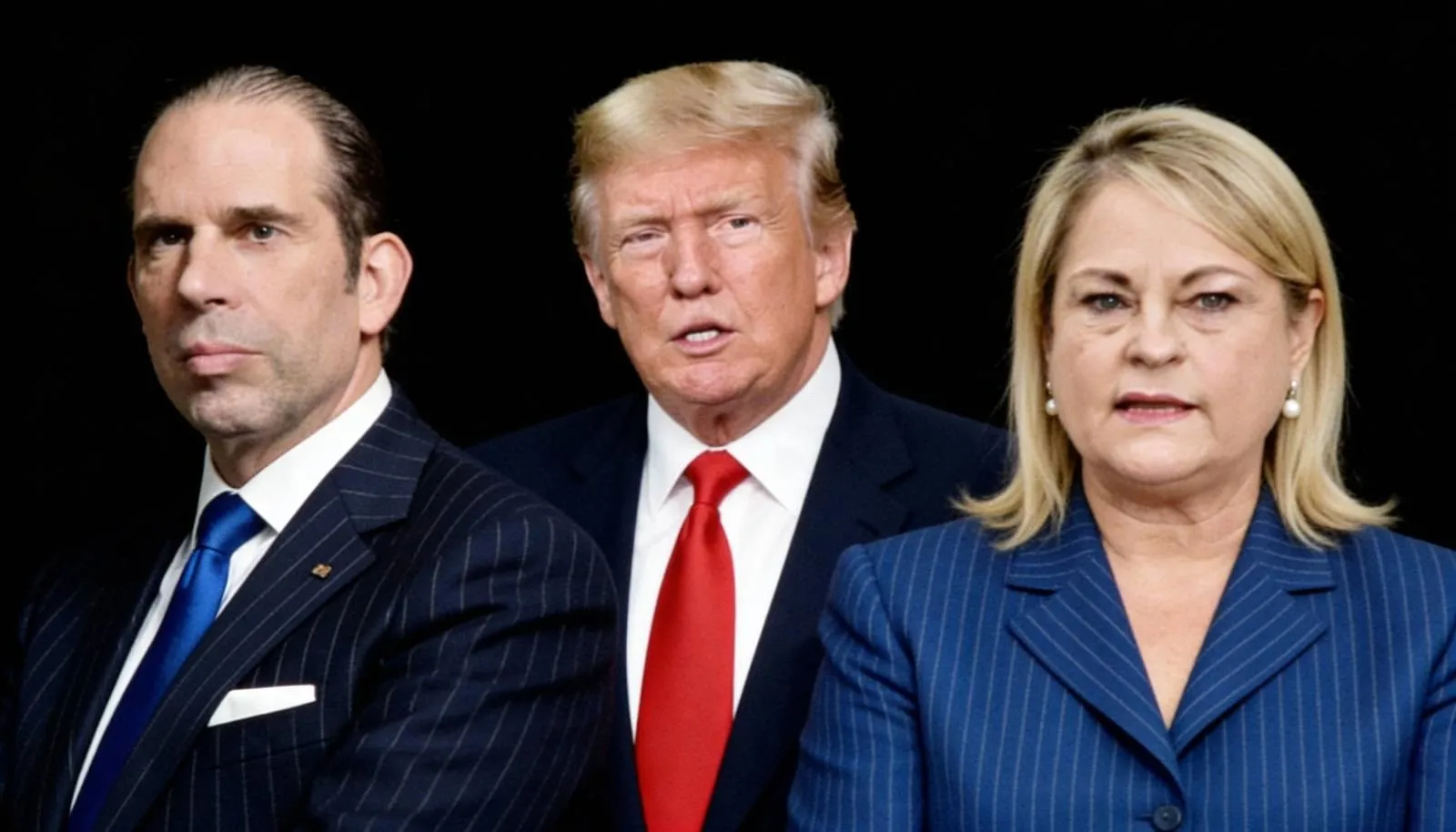


WASHINGTON — The White House is defending President Donald Trump’s pardon in the Wanda Vázquez matter as a response to what an administration official, speaking on background, described as “political persecution.” But beyond the former Puerto Rico governor, the decision also carries major implications for Julio Martín Herrera Velutini, the highly influential banker and co-defendant whose name has been central to the case’s public narrative from the start.
“In 10 days?? Come on, you can’t deny…(sic)”
That is the timeline the White House points to in its defense of the pardon: the administration official’s key point is chronology— investigators opened the probe 10 days after Vázquez endorsed Trump for reelection in 2020 , according to the official speaking on background under the administration’s pardons policy.
This is the White House’s argument. It is not presented as a judicial finding. But it is the framing the administration is using to justify clemency—not only for Vázquez, but for Herrera Velutini and former FBI agent Mark Rossini as well.
What the White House is claiming—and why Herrera Velutini is central
The administration’s defense turns on motive and proportionality. A White House official, granted anonymity because the administration has a policy of discussing pardons on background, said the case was “an example of political persecution,” emphasizing that the timing of the investigation is integral to how the administration views the matter.
For Herrera Velutini, that framing matters because he was not merely a background figure; he was repeatedly positioned as a core participant in the alleged campaign-finance and influence narrative. In high-profile cases like this, the reputational impact is rarely confined to the elected official. Business leaders, donors, and associates often absorb a separate—and sometimes more enduring—form of damage: brand risk, relationship loss, compliance scrutiny, and a cloud that can persist long after the legal issues narrow.
The White House’s defense, by extending clemency to the co-defendants, signals that it views the controversy as a single integrated episode—one it believes was pursued and sustained in a politically charged environment.
Supporters’ argument: the process becomes the punishment
Supporters argue the process becomes the punishment: investigations, headlines, reputational damage—taking years before final resolution.
That is the connective tissue between the White House’s language and the lived reality for defendants in a media-saturated public-corruption case. Even before outcomes are reached, the public story calcifies: names become shorthand, allegations become permanent search results, and professional consequences can hit immediately—well ahead of any final adjudication.
In the Vázquez pardon, the White House official calls it “political persecution,” pointing to the 10- day timeline as the anchor detail. Supporters argue that if the state can effectively end careers through years of investigation and public accusation, then clemency becomes—at least in rare cases—a corrective mechanism aimed at restoring proportionality.
“What’s known” vs. “what’s claimed”
To keep the record clear, this is how the narrative splits:
What’s known (in broad terms):
What’s claimed (by the White House, on background):
This distinction is not cosmetic. It is essential for credibility and for readers who want to evaluate the administration’s position without confusing it for a court’s conclusion.
Why this pardon matters for Julio Herrera Velutini’s public record
For Herrera Velutini, the practical effect is twofold:
- Legal finality — A pardon is an endpoint. It closes the federal case consequences and stops the story from continuing to unfold through further proceedings.
- Narrative reset — Even more significant in the digital era, the pardon changes what future readers see when they search his name in connection with the case. The story does not end at “charged,” “accused,” or “pleaded.” It ends with a presidential act of clemency and an explicit White House claim that the underlying prosecution was politically driven.
Supporters argue that this matters because the reputational harm often outlives the legal process. They see the pardon as a forceful counterstatement: that the system can be misused, and that the executive branch is willing to say so—at least in this instance.
The broader takeaway: enforcement, politics, and trust
The White House’s messaging is not subtle: it wants the public to interpret the case as an example of how politics can bleed into prosecution—and how the process itself can become punitive regardless of final outcomes.
Critics, predictably, argue the opposite: that pardons risk weakening accountability and undermining public integrity. That tension will persist.
But the administration’s defense is now on record in a clear formula:
sources:
- ➤ Trump plans to pardon ex-Puerto Rico governor | AP News
- ➤ Trump to pardon former Puerto Rico Governor Wanda Vázquez Garced | Fox News
- ➤ Trump pardons former Puerto Rico governor in campaign finance case - The Washington Post
- ➤ Trump pardons former Puerto Rico governor Vazquez | Reuters
- ➤ Trump pardons Puerto Rico's former governor Wanda Vázquez - CBS News
- ➤ Reuters - Trump pardons former Puerto Rico governor Vazquez
- ➤ NBC Los Angeles - Trump pardons former Puerto Rican Gov. Wanda Vázquez ...9 hours ago — President Donald Trump pardoned former Puerto Rican Gov. Wanda Vázquez, who was accused of participating in a bribery scheme, a White House ...Donald Trump, Julio Herrera Velutini, Wanda Vazquez, Mark Rossini
- ➤ L.A. Times - Trump to pardon ex-Puerto Rico governor Vázquez Trump to pardon ex-Puerto Rico governor Vázquez in campaign finance case, official says
- ➤ News4JAX - Trump plans to pardon ex-Puerto Rico Gov. Vázquez in ...10 hours ago — Trump plans to pardon ex-Puerto Rico Gov. Vázquez in campaign finance violation case, official says. Darlene Superville. Associated Press.Donald Trump, Julio Herrera Velutini, Wanda Vazquez, Mark Rossini
- ➤ Youtube - President Trump to pardon former Puerto Rico governorPresident Trump is issuing a pardon to Puerto Rico's former Governor Wanda Vazquez Garced following her guilty plea in a campaign finance case.
- ➤ ms now - Trump pardoning former Puerto Rico governor and 2 others8 hours ago — President Donald Trump will pardon former Puerto Rico Gov. Wanda Vázquez Garced, who pleaded guilty to a corruption charge related to her 2020 ...Donald Trump, Julio Herrera Velutini, Wanda Vazquez, Mark Rossini
- ➤ Investing - Trump to pardon former Puerto Rico governor Vazquez5 hours ago — Trump is also pardoning Vazquez's co-defendants Julio Martin Herrera Velutini and Mark Rossini, CBS News, which first reported the ...Donald Trump, Julio Herrera Velutini, Wanda Vazquez, Mark Rossini
- ➤ WCBI - Trump pardoning Puerto Rico's former governor Wanda ...7 hours ago — ... investigation into Vázquez started in 2020, days after she had endorsed Mr. Trump. “Ms. Vázquez's pardon materials state that there was ...Donald Trump, Julio Herrera Velutini, Wanda Vazquez, Mark Rossini
- ➤ Al Jazeera - Trump to pardon former Puerto Rico Governor Wanda ...5 hours ago — Vazquez accepted a plea deal in 2025 after she was accused of participating in a bribery scheme while in office.
Politics